Showing posts with label ICOs. Show all posts

Tuesday, 14 November 2017

More ICO Warnings As EU Issues Two Regulatory Statements

European Union regulators have issued two further warnings on ICOs, directed at both investors and participating businesses.
Released Monday, the European Securities and Markets Authority (ESMA) followed multiple jurisdictions in raising concerns that ICOs may not conform to regulatory norms.
“ESMA has observed a rapid growth in ICOs globally and in Europe and is concerned that investors may be unaware of the high risks that they are taking when investing in ICOs,” a summary of the reports states.
“Additionally, ESMA is concerned that firms involved in ICOs may conduct their activities without complying with relevant applicable EU legislation.”
The “concerns” come as the ICO industry undergoes major changes. A far cry from the explosive growth seen just months previously, pressure from lawmakers has appeared to engender a slowdown in the number of token sales and amounts raised.
A shift to providing legislation-compliant exposure to cryptocurrency meanwhile is coming to the fore, with global FX market CME Group announcing its Bitcoin futures trading would likely go live by the middle of next month.
Correspondingly, ESMA takes the opportunity to “remind” firms involved in ICOs of their required adherence two four specific EU directives on anti-money laundering (AML).
“It is the duty of the firms themselves to consider the regulatory framework, seeking the necessary permissions and meeting the applicable requirements,” it added.
Regulators in countries including Canada and the UK have voiced similar worries about the need for securities compliance in recent months, while Chinese exchange BTCC’s CEO Bobby Lee has said he considers it unlikely China would reverse its ban on the practice in the near future.
Read More »

Tuesday, 24 October 2017

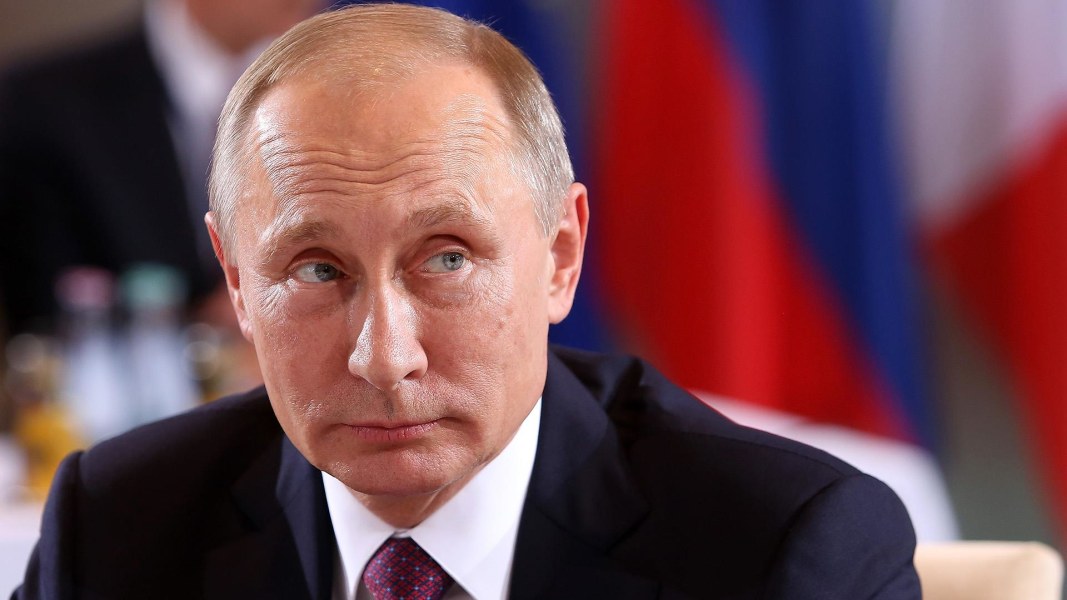
Putin Confirms Russia Will Regulate ICOs, Mining By July 2018


Russia’s President Vladimir Putin has signed off on regulation of ICOs and cryptocurrency mining by July 2018.
Quoted in local news outlet RNS, the Kremlin’s press service formally announced the move Tuesday which will see ICOs included in regulatory statutes “on the basis of” longtime regulated IPOs.
In addition, the government may now legally define the status of various terms related to what the Kremlin describes as “digital technology.”
These include so-called ‘distributed ledger technology’ alongside ‘cryptocurrency,’ ‘token’ and ‘smart contract.’
Ideas for a dedicated regulatory sandbox for fintech in partnership with the central bank should also surface by Dec. 20, RNS reports.

VTB Bank: consumers not interested in ‘very dangerous’ crypto

Russian state-owned VTB Bank “has not seen a lot of interest in Bitcoin” from the country’s consumers.
Speaking to CNBC, the bank’s CEO Andrey Kostin joined its international arm CEO Riccardo Orcel in saying that contrary to popular belief, real-world usage was low and cryptocurrencies were “very dangerous.”
"There was some interest reported in the press, but I've not seen in Russia a lot of interest in Bitcoin, to be honest," Orcel told the network.
Kostin added he was “a little bit skeptical” about cryptocurrency.
"We see a lot of high speculation factor in cryptocurrencies and I think it's dangerous," he warned.
"Until the governments decide how to regulate this area I think it will be very, very dangerous for investors to invest in cryptocurrencies."
Kostin’s perspective has been widely echoed in Russian political circles. A current package of regulations is due for release by the end of year, while politicians have expressed a desire to strictly limit cryptocurrency availability to regular consumers.
Conversely, Bitcoin, Ethereum and ICOs have conspicuously entered mainstream consciousness in the country, with everything from restaurant menus to vodka emerging with a crypto theme.
Burger King Russia was the world’s first example of a global fast food giant issuing its own cryptocurrency, Whoppercoin, this year.
In addition, Russia’s largest bank Sberbank announced it had formally joined the Enterprise Ethereum Alliance last week.
Read More »

Friday, 6 October 2017

ICO’s Still Have Options Despite Increasing Regulation

These days, it seems that regulation for ICOs and token sales is popping up everywhere. The SEC has already famously ruled on the DAO tokens, and both China and Korea have banned ICOs for the foreseeable future. Even the Swiss are starting to get cautious. It may well be that the ‘wild west’ days of the ICO are over.
However, some ICOs are seeking new ways to work around regulations in different countries, both regulations that deal with ICOs and other regulations dealing with distributed businesses. Below is a summary of three attempts to overcome regulation in a legal way, and how they might fare.

 Divide and conquer
 One option to dodge the regulatory climate is to divide the tokens into ‘security’ type tokens and ‘utility’ type tokens. The goal of this work-around is to allow for investment without falling afoul of the SEC.
 The key distinction between the two coins is the dividend payout. In the case of DCorp, for example, the non-security tokens will hold voting rights on the platform, but the security tokens will receive dividends. This framework allows the company to still issue tokens and receive investments from US investors, while at the same time, protecting themselves from SEC regulatory oversight.
 Will it work? It seems that by dividing the token, the move may well protect DCorp from SEC oversight. Dividing the tokens means that there are, in fact, two instruments of investment rather than one, and only one of the two will fall within the securities definitions stipulated by the Howey test.

 Buying Your Freedom
 Another option that some companies are considering is to simply buyout another entity with the necessary regulatory compliance. By buying the company and transferring the necessary rights or legal controls, the parent company can adopt the business model of the child corporation and dodge regulation.
 One example of this work-around is Stox, a prediction marketplace where token holders can predict the outcome of any number of events by betting their STX. The company recently announced the buyout of Commologic, a non-Blockchain technology firm that has existing gambling licenses.
 Stox hopes that the buyout will allow them to actively use these licenses in the UK and Malta, where they had been previously obtained. Stox recently said:

“Today Stox became the first regulated ICO prediction platform when it announced its first acquisition of a company with a gambling license, CommoLogic… Through the acquisition, Stox will acquire three gambling licenses from CommoLogic: A software license in the UK., an operating license also in the UK .and a Class 4 (B2B) license in Malta.”

 Will it work? It seems that it well work, since the Stox distributed platform is close enough to the CommoLogic platform that it can potentially continue on within the same framework and under the same license regimes.

 SAFT
 Another recent work-around is based on what is called the SAFT agreement. SAFT stands for Simple Agreement for Future Tokens, which essentially limits participants in ICOs to ‘accredited’ or ‘sophisticated’ investors, defined as those with an income of at least $200,000 or net assets above $1 mln.
“Investors in Blockchain protocol tokens have high demand for a regulated method of participating in token sales. The SAFT provides a a framework which offers answers to many questions surrounding token sales or ICOs. Issuers can use platforms like ours to communicate with our user base and onboard new accredited investors.”
 Will it work? The SAFT agreement is considered to be the best overall work-around by some, since it already has a counterpart in the VC world with SAFE, and would likely produce the best and safest results for ICOs within the US regulatory climate. Investors would be accredited by an outside company, which increases the regulatory comfort for the SEC and protects small-scale investors from larger fraudulent schemes.
 While regulations continue to abound, these sorts of work-around plans will continue to flourish as well.

Read More »

Thursday, 5 October 2017

Singapore Is Monitoring Bitcoin, Ether & ICOs, Says Dep. Prime Minister

Singapore’s deputy prime minister has revealed the central bank is keeping an eye on developments in cryptocurrencies and ICO fundraising, with a regulatory framework for the latter.

In response to a question in the Singaporean Parliament this week, Deputy Prime Minister and Minister in charge of the Monetary Authority of Singapore (the central bank) Tharman Shanmugaratnam said that the authority is looking into the use of virtual currencies and, subsequently, working on a “new payment services regulatory framework” to address money laundering and terrorism financing risks.

In posing the question, Member of Parliament Miss Cheng Li Hui asked:

“To ask the Prime Minister (a) whether the Government is keeping track of the use/investment of crypto currencies such as bitcoin in Singapore; (b) how do crypto currencies affect our finance industry; (c) whether studies are being conducted to assess the problems and risks of using/investing in crypto currencies; and (d) whether regulatory frameworks are necessary in the future.”

In response, Singaporean deputy prime minister Shanmugaratnam confirmed that while cryptocurrency wasn’t deemed ‘legal tender’ in the country, cryptocurrencies like “Bitcoin and Ether have been adopted by people in some communities to pay one another or to pay for goods and services.”
Further, the official confirmed the MAS “has been monitoring” the use of cryptocurrencies in Singapore.

Pointedly, he added that virtual currencies weren’t subjected to direct regulation by the central bank. However, the MAS is working on a regulatory framework for risks associated with virtual currency transactions.

The deputy prime minister stated:

Similar to most jurisdictions, MAS does not regulate virtual currencies per se. However, we regulate the activities that surround them if those activities fall within our more general ambit as financial regulator…[As an example] Virtual currencies, due to the anonymous nature of the transactions, can be exploited for money laundering and terrorism financing risks. MAS is working on a new payment services regulatory framework that will address these risks.
Further, the official added that initial coin offerings (ICOs) represent fundraising activities that “fall under MAS’ regulatory ambit.’ Although publicly stating that ICOs must comply with existing securities laws earlier in April, the Singaporean politician confirmed that the central bank will continue to monitor ICOs in the future, with the possibility of legislation.

He added:

MAS has not issued new legislation specifically for ICOs. We will continue to monitor the developments of such offers, and consider more targeted legislation of necessary.

Shanmugaratnam went on to state that the central bank’s focus lies in assets such as company shares, rather than virtual currencies or digital tokens. “MAS does not and cannot regulate all products that people put their money in thinking that they will appreciate in value,” the official concluded, whilst adding that the central bank will continue to work on publishing advisories on the risks related to scams abusing digital currencies. 
Read More »